Most broken bones heal. Given the right alignment, stability, and blood supply, the body is remarkably good at knitting a fracture back together within a few months. But sometimes healing stalls, and the bone simply refuses to unite. This is called a nonunion, and it is one of the most challenging problems in orthopaedics. Here is what a nonunion is, why it happens, and how modern limb reconstruction gives patients a way forward.
What Is a Nonunion?
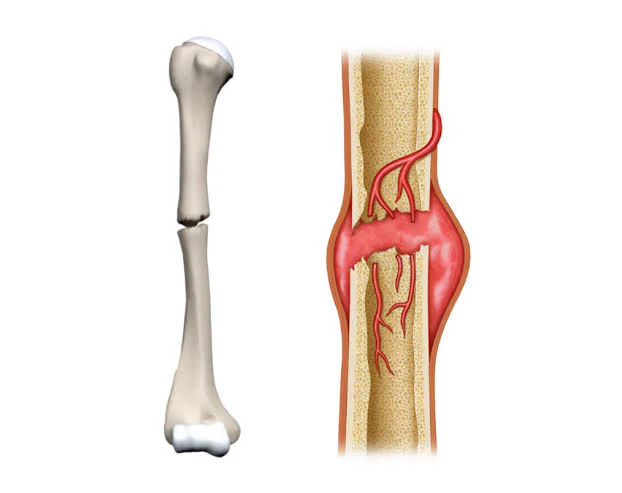
A nonunion is a fracture that has failed to heal within the expected time and shows no signs of progressing to healing. Doctors usually distinguish it from a delayed union, where healing is slow but still moving in the right direction. In a true nonunion, the process has effectively stopped.
The result is often a limb that remains painful, unstable, or deformed long after the original injury should have settled. For the patient, it can mean months or years of frustration, repeated procedures, time away from work, and a serious dent in quality of life.
Why Do Some Fractures Fail to Heal?
Bone healing depends on a few key ingredients, and a nonunion usually means one or more of them is missing. Common contributing factors include:
- Poor blood supply. Bone needs a rich blood flow to heal. Severe injuries that damage surrounding vessels can starve the fracture of what it needs.
- Instability. If the broken ends move too much, new bone cannot bridge the gap. Adequate stability is essential.
- Infection. An infected fracture is far harder to heal. Infection disrupts biology and is one of the toughest scenarios a surgeon faces.
- Bone loss or a large gap. When trauma destroys a segment of bone, there may simply be too much distance for the body to bridge on its own.
- Patient factors. Smoking, diabetes, poor nutrition, and certain medications can all slow or block healing.
Understanding the cause matters, because the right treatment depends entirely on why the bone failed to unite in the first place.
The Special Challenge of Infected Nonunions
Among all nonunions, the infected variety is the hardest to treat, and it is a major focus for reconstruction surgeons. Here the surgeon must fight two battles at once, clearing the infection while also encouraging the bone to heal. Traditional internal implants, like plates and nails, can struggle in an infected environment because the metal itself can harbour bacteria.
This is where external methods come into their own. By stabilising the bone from outside and avoiding large implants at the infected site, surgeons can manage the infection and rebuild the bone at the same time.
How Nonunions Are Treated
Treatment is always tailored to the individual case, but the goals are consistent: remove any infection, restore a healthy biological environment, provide stable fixation, and bridge any gap in the bone. Depending on the situation, this may involve bone grafting, careful debridement to remove dead or infected tissue, and a fixation method suited to the case.
The Ilizarov method and other ring fixator techniques are especially powerful here. Because the frame stabilises the limb from outside and allows gradual, controlled correction, it can hold a difficult fracture steady while healing catches up. It can also transport a segment of healthy bone across a gap left by infection or trauma, effectively regrowing the missing bone. For many patients who were once told amputation was the only option, these techniques offer a genuine path to a saved, functional limb.
The Value of Specialist Care
Nonunions rarely respond to a one-size-fits-all approach. Each case needs careful analysis of the cause, the biology, the alignment, and the soft tissue, followed by a plan built specifically for that patient. This is demanding work that draws on years of training and shared surgical experience.
It is precisely this challenge that the limb reconstruction community continues to focus on. The theme of ASAMI India's 2026 mid-term meet, "Approaching Nonunions," reflects how central this problem remains, and how much value there is in surgeons coming together to compare strategies, debate internal versus external fixation, and learn from one another's toughest cases.
The Takeaway
A nonunion can feel like a dead end, but it rarely is. With the right diagnosis, a plan that addresses the true cause, and the reconstruction techniques available today, even long-standing and infected nonunions can be treated successfully. If you are living with a fracture that will not heal, the most important step is to reach a surgeon experienced in limb reconstruction who can assess your case in full.
This article is for general education only and is not a substitute for medical advice. If you have a fracture that has not healed, please consult a qualified orthopaedic surgeon.